
React room features
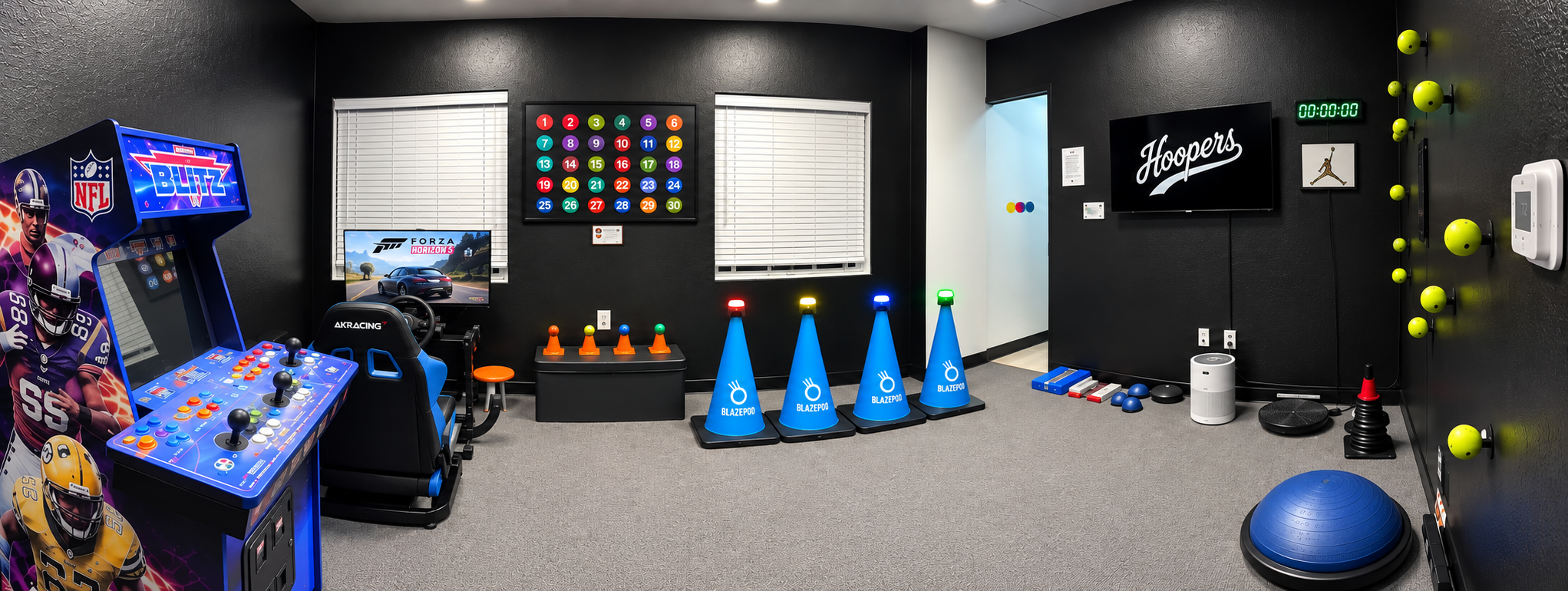
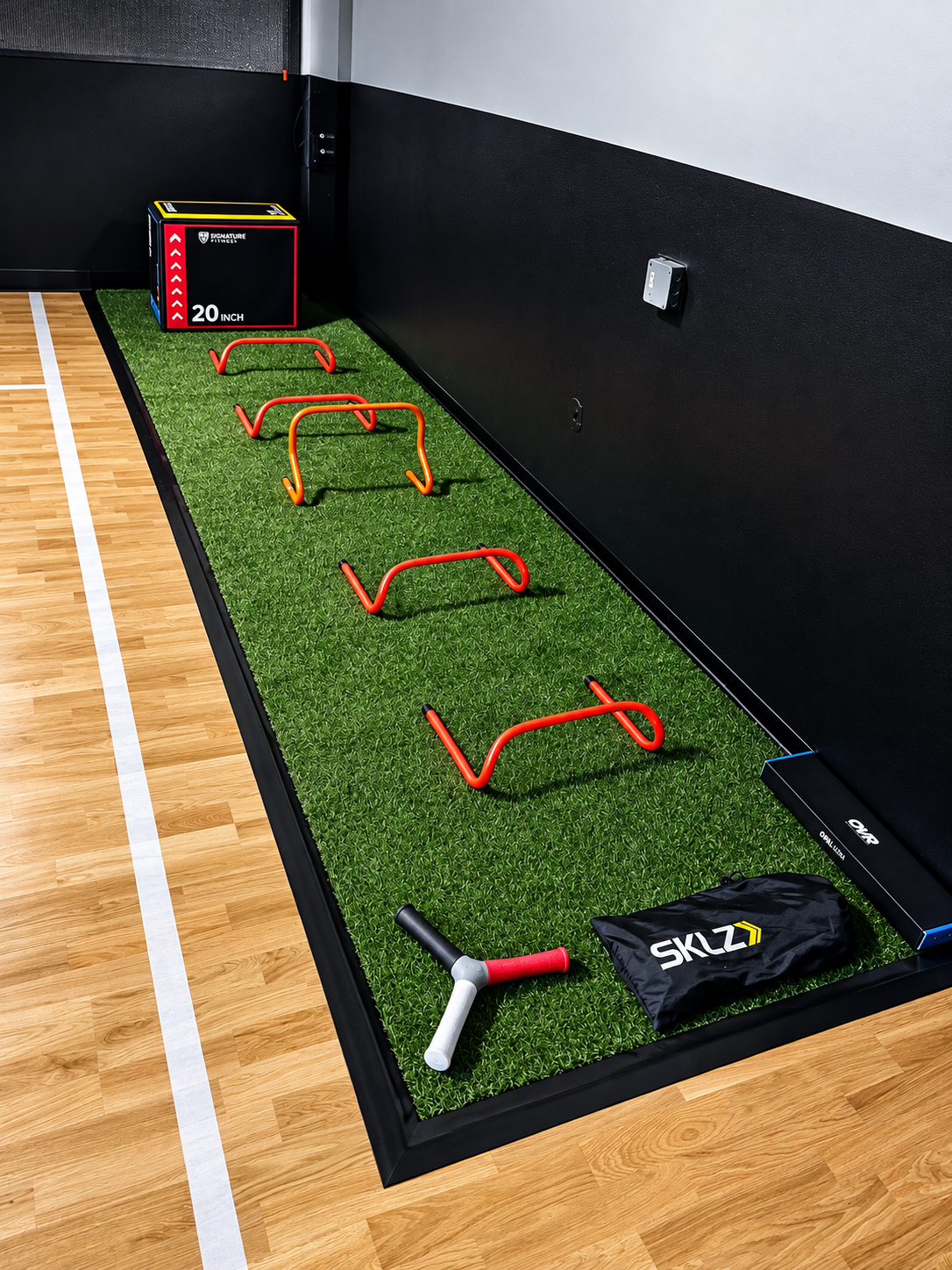
Our React Room is equipped with over 10 stations specifically designed to improve reaction timing, peripheral vision and increase cognitive processing times.
-
Focuses on reaction time, decision making and hand eye coordination.
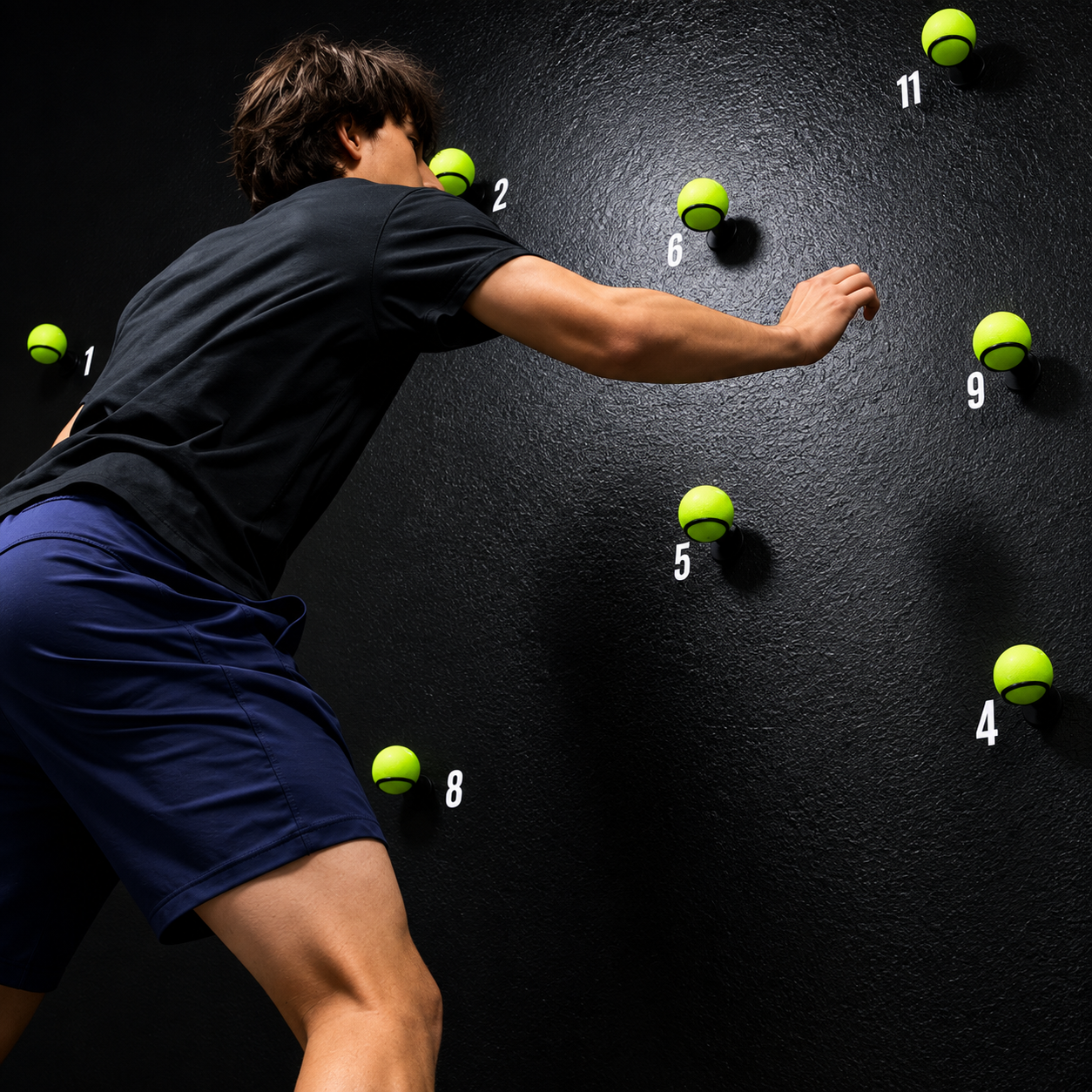
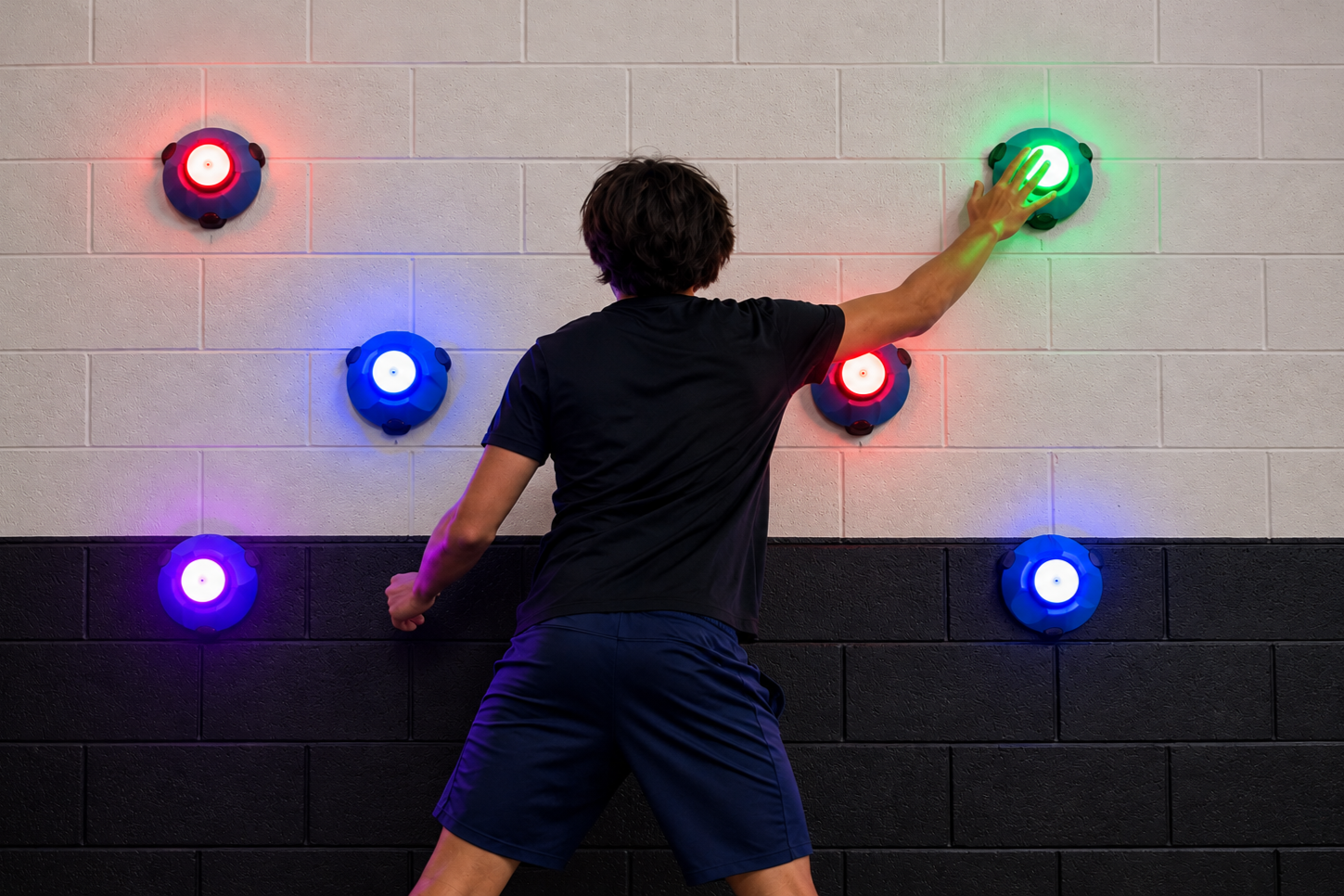
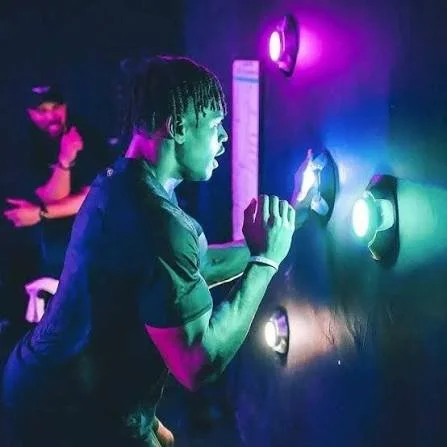
Our BlazePod wall station features over 6 pods and the React Room is also equipped with a seated Cone station to test and track your reaction times to ensure we are making measurable improvements.
BlazePods help athletes by using randomized, flashing lights to train the brain and body to react instantly to unpredictable visual cues -
Focuses on Hand-Eye Coordination, Visual Processing, Tracking and reaction timing.
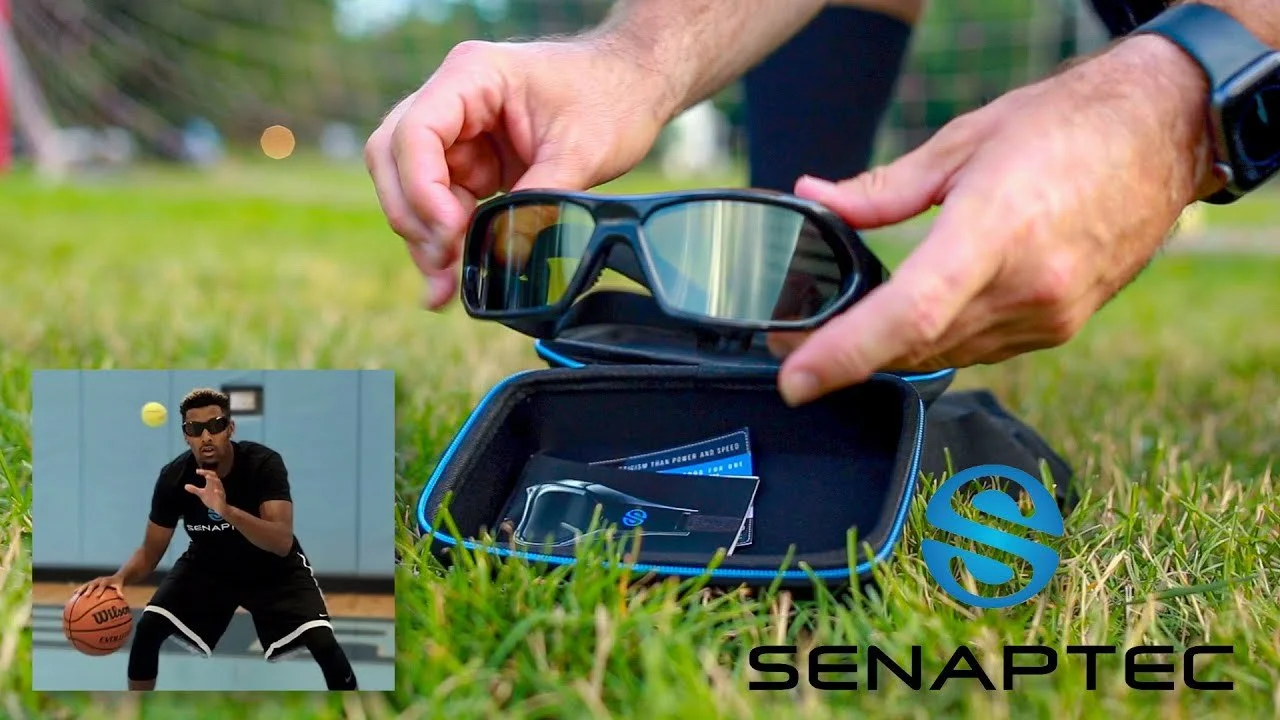
Strobe training is a new emerging technology used in many sports at the collegiate and professional level.
Strobe Training works to improve:Eye-Hand Coordination: Sync hand movement with visual input
Reaction Time: Respond more quickly to what you see
Movement Accuracy: Respond with accurate movement
-
Focuses on court vision, spacial awareness, and eye speed.
Peripheral vision—everything you see outside your direct line of sight—is a critical, often-overlooked tool that allows athletes to track movement, anticipate plays, and avoid collisions without turning their heads. -
Focuses on Eye Speed, Scanning and Cognitive Processing.
Saccade training uses rapid, jerky eye movements to help athletes shift their focus instantly between targets like a ball, teammates, or opponents. -
Focuses on Cognitive Processing and decision making.
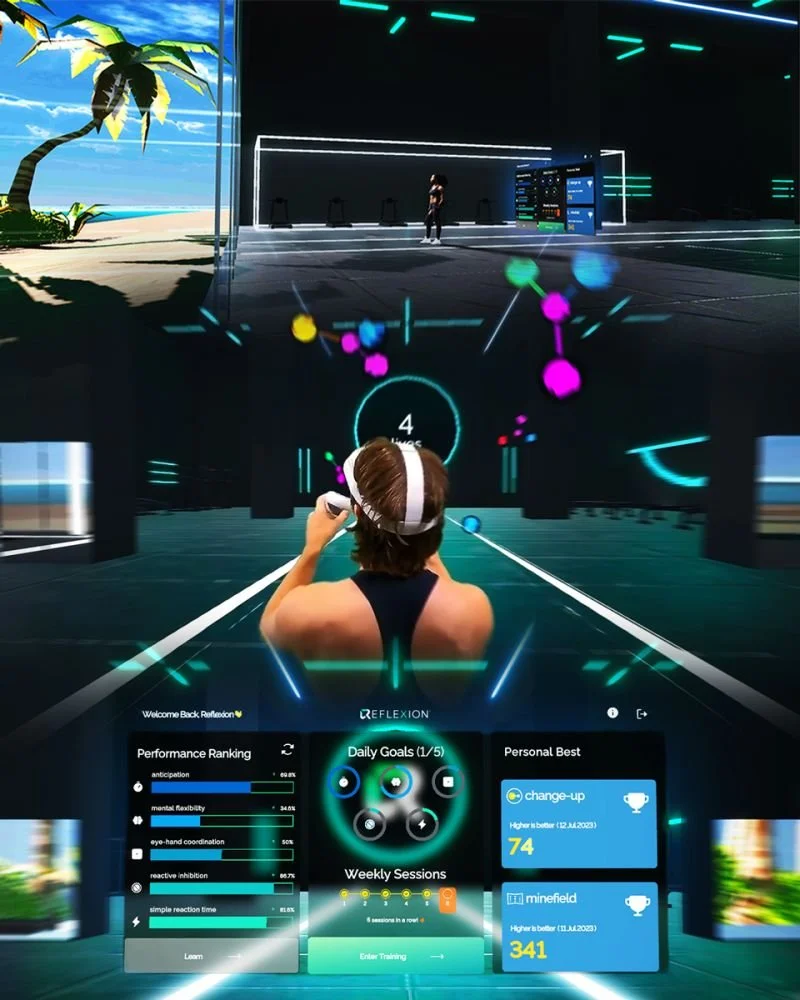
Reflexion virtual reality (VR) training helps athletes by strengthening the brain's perceptual-cognitive pathways, bridging the gap between visual input and physical executionUsing immersive applications like Reflexion GO on VR headsets, athletes complete targeted drills designed to sharpen the mental skills required for split-second, high-pressure sports.
-
Focuses on Reaction timing, peripheral awareness, sustained attention and decision making.
Faster Visual Processing: Simulators force athletes to scan horizons, track fast-moving objects, and process visual data rapidly, shrinking reaction times for reading a blitz or spotting an open cutter.Peripheral Spatial Awareness: Navigating tight windows at high speeds hones an athlete's ability to track multiple moving bodies simultaneously (such as defenders or receivers) without direct fixation.
Split-Second Decision Making: High-pressure virtual environments train the brain to remain calm and make correct tactical choices when time and options are severely compressed.
Hand-Eye Coordination & Reflexes: Coordinating precise inputs while filtering out visual and auditory distractions builds baseline neurological
-
Focuses on Processing speed, decision making and memory/anticipation.
Better Anticipation: Strong pattern recognition helps experienced competitors predict an opponent's next move before it fully happens.
Focused Attention: Athletes use cognitive control to filter out crowd noise, scoreboard pressure, and other distractions.
Real-Time Adaptability: When plays break down or opponents adjust, quick mental processing allows athletes to change plans instantly.
Reduced Hesitation: Clear mental processing removes doubt, shortening the delay between perception and physical movement.